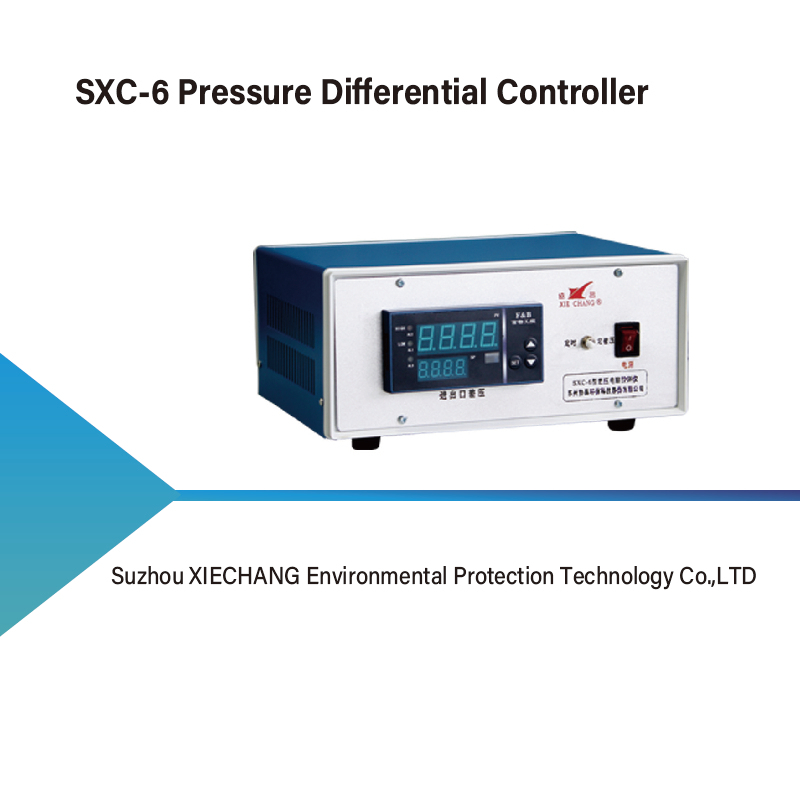
In the world of automation and industrial efficiency, pulse control stands as one of the simplest yet most powerful methods for driving motion systems and managing industrial processes. Whether it’s controlling stepper motors in automated machinery or managing the precise activation of electromagnetic pulse valves in a dust collector, understanding the pulse control basics for motion control is essential for engineers, integrators, and maintenance professionals alike.
This comprehensive guide explains how pulse control works, the difference between 1P and 2P modes, how to configure pulse signals with PLCs, and how Xiechang Pulse Controllers optimize the performance of modern pulse jet cleaning systems and motion control systems.
![]()
1. What Is Pulse Control in Motion Control?
Pulse control refers to a technique where a controller—such as a PLC or motion controller—sends a train of electrical pulses to a driver or amplifier. Each pulse represents a small incremental motion of the motor or actuator. The total number of pulses determines how far the actuator moves, and the frequency of the pulses determines the speed of motion.
In a motion control system, pulse control acts as the link between the controller and the motor. It provides a cost-effective, flexible, and easy-to-configure way to automate simple machines—typically systems requiring two to three motion axes.
But pulse control isn’t limited to motors alone. The same principle applies to industrial dust collector systems where each pulse controls the operation of a solenoid valve, triggering a short burst of compressed air to clean the filter bags. This is where Xiechang Pulse Controllers excel—delivering reliable, precise, and programmable pulse outputs for a wide range of industrial applications.
2. How Pulse Train Signals Work
2.1 What Is a Pulse Train?
A pulse train is a sequence of ON/OFF electrical signals sent from a controller. Each pulse corresponds to one unit of motion or one event. The signal’s frequency defines how fast the event occurs, while the number of pulses defines how far or how many times it occurs.
2.2 Example: Pulses and Motor Rotation
If a stepper motor requires 200 pulses for one complete revolution (200 pulses per revolution or ppr), then one pulse equals 1.8° of rotation. The formula for speed and distance is:
Rotations per second (rps) = Pulses per second (pps) / Pulses per revolution (ppr)
Rotations per minute (rpm) = rps × 60
For example, sending 200 pps to a 200 ppr motor results in one revolution per second or 60 rpm. The same logic applies to other systems—like dust collectors—where pulse frequency defines the interval between cleaning cycles.
3. Pulse Control Modes: Step/Direction vs CW/CCW
There are two common control modes used for pulse output: 1P mode (Step/Direction) and 2P mode (CW/CCW).
3.1 Step/Direction Mode (1P Mode)
In 1P mode, one signal is used to send the step (pulse) command, and another signal determines the rotation direction. This method is simple, requiring fewer signal lines and is widely used in PLC-controlled motion applications.
3.2 CW/CCW Mode (2P Mode)
In 2P mode, two separate pulse signals represent clockwise (CW) and counterclockwise (CCW) motion. Only one signal is active at a time depending on the intended direction. This method is intuitive for troubleshooting and commonly used in systems that require direct directional logic.
3.3 Choosing the Right Mode
For most motion control systems, 1P mode offers simplicity. However, for systems with high noise environments or frequent direction changes—like industrial dust collectors—2P mode may provide more reliable operation. The Xiechang Pulse Controller series supports both modes, allowing flexible configuration for different industrial setups.
4. Pulse Control in PLC-Based Systems
Modern PLCs include built-in high-speed pulse outputs that make motion and timing control easier. These outputs can drive stepper or servo amplifiers directly or connect to a pulse controller such as Xiechang’s intelligent models for managing multiple devices or valves.
Pulse count determines distance or duration of an event
Pulse frequency determines speed or timing
Direction signal (if applicable) controls rotation or sequence flow
For example, commanding +1000 pulses may open a valve or move an actuator forward, while −1000 pulses may trigger a reverse or reset operation. In Xiechang Pulse Controllers, the same principle controls the number of solenoid valve outputs, pulse width, and interval between cleanings—ensuring each dust collector row receives optimal air bursts.
5. Absolute vs Incremental Control
Pulse-based systems often use two types of movement commands: absolute and incremental.
Absolute control moves the actuator to a specific position regardless of its current location. In dust collection, this might equate to a defined sequence cycle (e.g., row 1 to 12).
Incremental control moves relative to the current position, useful for repeating cycles or timed events, such as pulsing every 10 seconds.
Understanding both allows engineers to synchronize cleaning cycles, actuator positions, or timing intervals precisely—key to keeping both motion control systems and pulse jet cleaning systems running smoothly.
6. Wiring and Configuration Best Practices
Reliable pulse control begins with proper wiring and setup. Here are some key tips:
6.1 Common Wiring Mistakes
Swapping step and direction lines
Incorrect CW/CCW signal mapping
Improper grounding or shielding causing electrical noise
Mismatched controller and driver settings
6.2 Setup Steps
Select your pulse mode (1P or 2P)
Match pulse output parameters between controller and driver
Set pulse width, frequency, and interval on the Xiechang Pulse Controller
Connect output lines to electromagnetic pulse valves or motor drives
Run a test sequence to confirm correct timing and direction
6.3 Troubleshooting Tips
If the motor or valve does not respond, verify:
Pulse output LEDs on the controller
PLC high-speed counter or busy flag status
Pulse frequency settings (too low may appear as no motion)
7. Converting Pulses into Engineering Units
In many PLC programs or HMI displays, engineers see motion in units of pulses rather than physical measurements. To make systems more user-friendly, convert these into engineering units such as millimeters or seconds.
7.1 Command Pulse Constant
Command Pulse Constant = Pulses per Revolution / Distance per Revolution
For example, if a motor outputs 500 pulses per revolution and moves 10 mm per revolution, the constant is 50 pulses per mm. This means 1 mm of motion requires 50 pulses. In Xiechang’s controllers, similar constants determine how many pulses trigger each valve sequence.
7.2 Speed Conversion
Pulse Speed (pps) = Speed Constant × Desired Speed
Where “Speed Constant” is the same 50 pulses per mm in the example above. This ensures accurate and predictable motion or cleaning cycles in automated systems.
8. Practical Pulse Control Tips
Use the same pulse mode for all axes or control points.
Document every pulse parameter—width, frequency, number of outputs.
When testing, start with a low frequency to avoid mechanical stress.
Convert HMI displays into intuitive units (mm, sec, RPM).
Keep wiring short, shielded, and properly grounded.
Following these practices minimizes setup time and ensures reliable operation in both motion control systems and industrial dust collector controllers.
9. Pulse Control in Dust Collector Systems
While pulse control is traditionally associated with motion control, its principles also power the core of modern pulse jet cleaning systems. In baghouse dust collectors, compressed air is released through a series of valves to clean filter bags. Each release is governed by a precise pulse signal—timed, counted, and sequenced by a pulse controller.
The Xiechang Pulse Controller series provides programmable control over:
Pulse width – Duration of air burst
Pulse interval – Time between pulses
Number of outputs – Number of valves controlled per cycle
Sequence mode – Continuous or on-demand cleaning
For example, the BHK Intelligent Pulse Controller and SXC-SK01-C8A1 models feature adjustable timing, multiple channel outputs, and digital display settings for easy configuration. These controllers ensure efficient cleaning cycles, reduced compressed air consumption, and longer filter life in industrial applications like cement, metallurgy, chemical, and power generation.
10. Pulse Control vs Other Motion Control Methods
Pulse control provides a direct, easy-to-implement motion or event control method, but it’s not the only option. Here’s how it compares:
| Control Type | Advantages | Limitations |
| Pulse Control | Low cost, simple wiring, excellent for basic automation | Limited feedback, not ideal for complex multi-axis synchronization |
| Analog Control | Smooth motion control via voltage or current | Requires analog interfaces, more noise-sensitive |
| Networked Motion (EtherCAT, Ethernet/IP) | High precision, synchronization, real-time feedback | Higher cost and complexity |
For small to medium systems—or standalone industrial controllers like those in dust collectors—pulse control offers the best balance of simplicity, performance, and cost. Xiechang has leveraged this principle to design pulse controllers that are both powerful and easy to deploy in diverse environments.
11. Frequently Asked Questions (FAQ)
Q1: What is the difference between 1P and 2P pulse modes?
1P uses a single step signal plus a direction line, while 2P uses two separate signals (CW and CCW) for direction. Both achieve the same goal but differ in wiring and logic simplicity.
Q2: Can pulse control be used in multi-axis systems?
Yes. Many PLCs and motion controllers provide multiple high-speed pulse outputs to control two or more axes. However, for very complex synchronization, fieldbus networks are recommended.
Q3: How does a pulse controller work in a dust collector?
It sends timed electrical pulses to electromagnetic pulse valves, opening them in sequence to release compressed air for cleaning the filter bags.
Q4: What happens if the pulse width or interval is set incorrectly?
If pulse width is too long, it wastes compressed air; too short, and the filters won’t be cleaned properly. Incorrect intervals may cause inefficient cleaning or rapid valve wear.
Q5: How can I optimize my system?
Use programmable controllers like Xiechang’s BHK or SXC series to fine-tune pulse width, interval, and sequence length to match your dust collector’s air volume and filter size.
12. Applications of Pulse-Controlled Systems
Industrial dust collector systems
Baghouse and cartridge filter cleaning systems
Packaging machinery and conveyor systems
Laboratory automation and material handling
Small robotic actuators and servo-driven tools
From precision motion to industrial filtration, pulse control forms the foundation of numerous automation applications. Its ability to produce accurate, repeatable results makes it indispensable for both mechanical motion and pneumatic valve control.
13. Why Choose Xiechang Pulse Controllers?
Xiechang has been a trusted name in pulse jet cleaning control systems and industrial automation for years. Their Pulse Controller product line is designed with advanced microprocessor technology, durable construction, and intuitive interfaces for ease of operation.
Key Features:
Wide timing adjustment range for pulse width and intervals
Multi-channel outputs (8–48 points depending on model)
LED digital display for real-time status
Compact, durable design suitable for harsh environments
Compatible with electromagnetic pulse valves of various specifications
Whether you need precise motion control or efficient dust removal cycles, Xiechang’s controllers deliver reliability and accuracy with every pulse.
14. Key Takeaways
Pulse control is a simple, efficient, and precise way to automate motion and timing tasks.
Understanding pulse frequency, mode selection, and wiring ensures optimal performance.
In dust collector systems, pulse control directly determines cleaning efficiency and filter longevity.
Xiechang Pulse Controllers integrate intelligent timing and multi-channel outputs for flexible, programmable industrial control.
15. Conclusion & Call to Action
Mastering the Pulse Control Basics for Motion Control helps engineers build better, more efficient automation systems—whether in robotics or environmental equipment. With products like the Xiechang BHK Intelligent Pulse Controller and SXC-SK01-C8A1, you can achieve precise, reliable, and energy-efficient operation across diverse industries.
Ready to optimize your dust collector or automation system? Learn more about our Xiechang Pulse Controllers or contact our technical team for customized