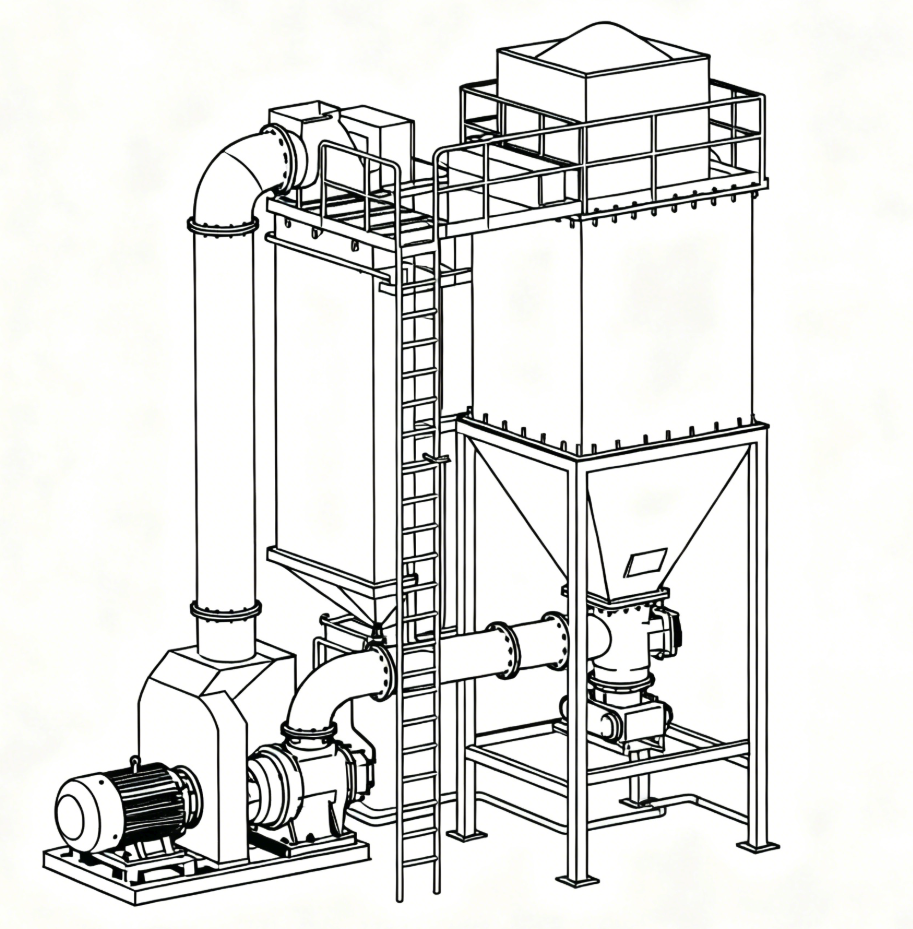
A pulse jet dust collector is one of the most efficient ways to remove dust and fine particles from industrial air. If you’ve ever wondered how a pulse-jet dust collector keeps your workspace clean while running continuously, this guide will explain it step by step. From filter cartridges capturing dust to the reverse pulse cleaning system that dislodges particles automatically, we’ll cover key components, airflow, setup tips, and maintenance insights. Whether you’re choosing a new system or optimizing an existing one, understanding how a pulse-jet dust collector works can save time, money, and energy.
Key Components of a Pulse Jet Dust Collector
A pulse-jet dust collector may look simple, but it’s built from several key components working together. Each part plays an important role in keeping the air clean and the system running efficiently.
Main Components and Their Functions
Compressor (Air Supply)
Supplies compressed air for the pulse-cleaning system. Without it, the filters can’t be cleaned, and dust would accumulate.
Solenoid Valves and Diaphragm Control
Directs the compressed air into the filters. Diaphragms open and close quickly, creating the pulse that dislodges dust.
Tube Sheet
Separates dirty and clean air compartments. Filters hang from it, and gaskets prevent dust from bypassing.
Bags or Cartridges
Filter media where dust collects. Pleated designs and nanofiber coatings capture fine particles efficiently.
Hopper (Dust Collection)
Collects dislodged dust during the pulse cycle. Its shape ensures particles fall freely and don’t clog the system.
Frame and Support Rails
Holds filters in position and maintains tension. Keeps bags and cartridges from sagging or moving during pulses.
Clean and Dirty Air Plenums
Channels air before and after filtration. Ensures uniform flow through all filters, preventing hotspots or turbulence.
Automatic Regeneration Control Unit
Controls pulse frequency, duration, and sequence. Optimizes cleaning and reduces energy use.
Filters and Cartridges
Filters are the heart of the collector. Their design and material affect efficiency, dust holding capacity, and maintenance.
| Feature | Vertical Filters | Horizontal Filters |
| Materials | Polyester, Acrylic, Fiberglass, Nanofiber-coated | Polyester, Acrylic, Fiberglass, Nanofiber-coated |
| Arrangement | Hang from tube sheet; dust drops directly into hopper | Lay stacked; dust can fall on lower filters |
| Cleaning Efficiency | High; pulse cleaning more effective | Moderate; dust can redeposit on lower filters |
| Dust Flow | Dust falls straight down | Dust may accumulate on other filters |
| Maintenance | Easier access for inspection and replacement | Slightly harder access |

How Does a Pulse-Jet Dust Collector Work?
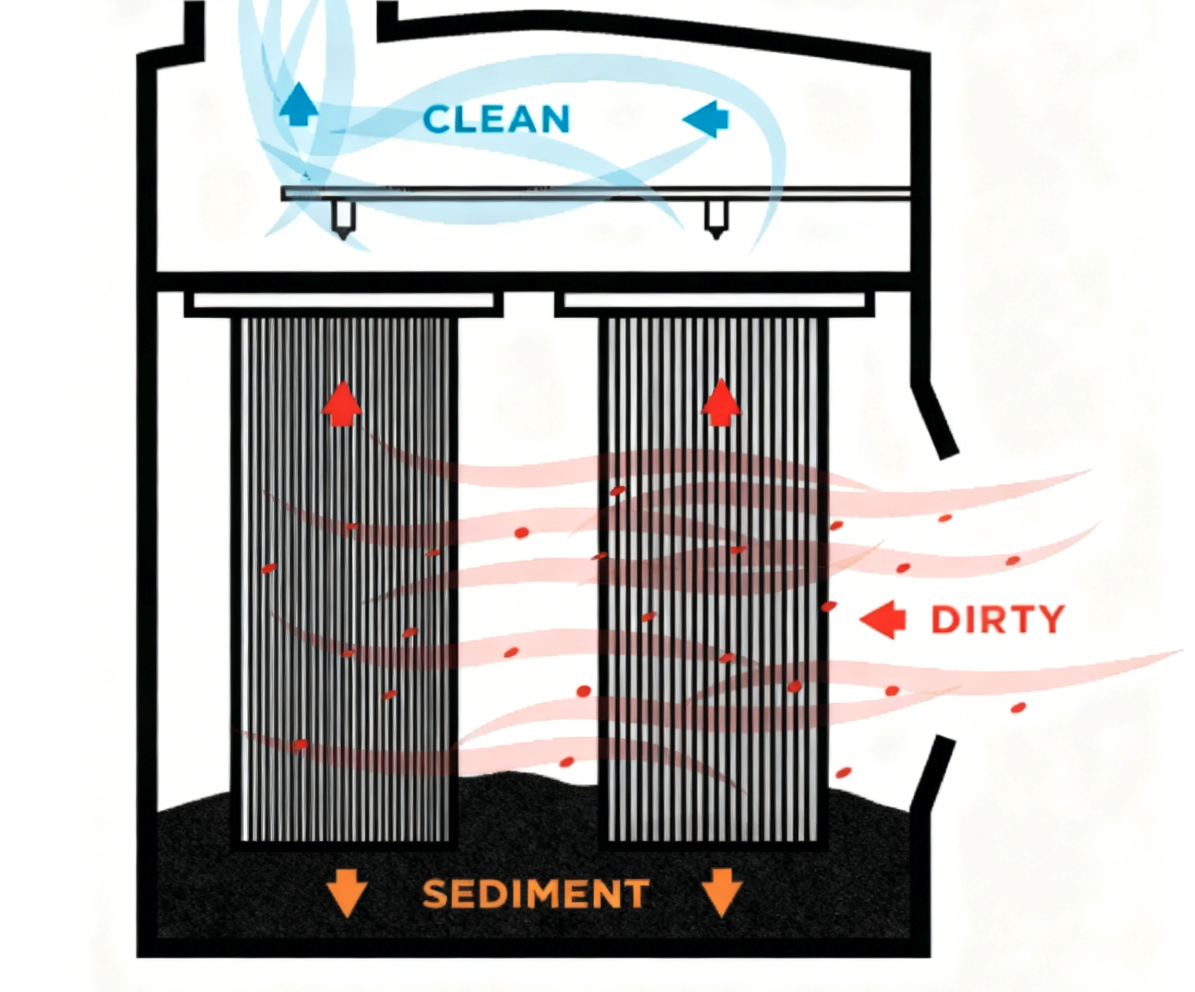
A pulse-jet dust collector might look simple, but the process inside is fascinating. Essentially, dirty air enters, dust is captured, and clean air exits—but let’s break it down step by step.
Step-by-Step Airflow
Dirty Air Intake – Dusty air is drawn into the collector through ductwork. Fans push or pull it along.
Dust Separation – The air slows down as it hits baffles. Larger particles drop out and fall into the hopper below.
Filter Contact – Remaining fine dust moves toward filter bags or cartridges. Air passes through the media, leaving most particles on the outside surface.
Clean Air Exit – Filtered air flows into the clean air plenum and then back into the workspace or vented outside.
Dust Capture Mechanism
The dust collector relies on the filter media to trap particles:
Filter Media: Fabric bags or pleated cartridges capture airborne dust.
Particle Separation: Fine particles stick to the media surface, while larger particles drop into the hopper.
Pleated Design: Cartridges increase surface area, allowing more air to pass while capturing more dust.
| Particle Type | Behavior on Filter |
| Large (≥50 µm) | Falls into hopper |
| Medium (10–50 µm) | Sticks, later dislodged |
| Fine (<10 µm) | Trapped on filter surface |
Pulse Jet Cleaning Mechanism
Filters need regular cleaning to keep airflow steady, and that’s exactly where the pulse-jet system comes into play. Basically, a short burst of compressed air shoots into the center of each filter. The blast pushes outward, loosening and shaking off dust that has stuck to the surface. Once dislodged, the dust falls straight into the hopper below, ready to be collected. One of the biggest advantages is that the system works while the dust collector is running, so there’s no need to stop operations.
A few quick points make the pulse-jet cleaning system even more impressive. Each pulse lasts just 0.1–0.3 seconds, enough to remove dust without stressing the filter media. The pulses are usually triggered automatically, sometimes controlled by differential pressure sensors that detect when filters are loaded. This smart control helps protect the filters from premature wear, extending their lifespan and keeping the collector efficient.
How Reverse Pulse Cleaning Works
Reverse pulse or reverse jet cleaning flips the airflow for maximum dust removal:
Air blasts opposite the normal flow, loosening dust trapped on the media.
The pulse creates a mechanical shaking effect, helping remove stubborn particles.
Differential pressure sensors detect filter loading and control pulse timing.
Only the necessary compressed air is used, saving energy.
Benefits of Pulse-Jet Cleaning
| Benefit | How It Helps |
| High Collection Efficiency | Keeps air clean and compliant |
| Reduced Downtime | Continuous production |
| Longer Filter Life | Fewer replacements, lower costs |
| Energy Savings | Less compressed air used |

Setting Up a Pulse Jet Dust Collector
Proper setup is crucial to get the most out of a pulse-jet dust collector. A poorly configured system can reduce efficiency, increase downtime, or damage filters. Here’s how to set it up correctly.
Compressed Air Setup
The pulse-jet system relies on reliable compressed air to clean filters. Key points for setup include:
Tubing and Connections: Use heavy-duty industrial rubber tubing or black pipe. Keep connections tight to avoid leaks.
Regulators: Install inline air regulators to maintain the desired PSI.
PSI Requirements: Most systems work best around 90 PSI. Higher pressure doesn’t improve cleaning and can damage filters or diaphragms.
Dry Air: Always use dry compressed air. Moisture or condensation can reduce cleaning efficiency and freeze in cold conditions.
Electrical Setup
The solenoids and control system must be connected correctly:
Provide power to solenoids according to manufacturer specifications.
Integrate control panels or timer boards for automated pulse cycles.
Ensure grounding and safety measures to prevent electrical faults.
Verify all wiring is insulated from vibration or dust exposure.
Timer and Sensor Integration
Pulse-jet cleaning works best when triggered intelligently:
Timer boards control pulse duration and intervals.
Differential pressure sensors monitor the filter load.
Pulses occur only when necessary, conserving compressed air and extending filter life.
Pressure and Pulse Settings
Fine-tuning the pulse system is essential for efficient operation.
| Setting | Recommended Range | Notes |
| Pulse Pressure (PSI) | 85–95 PSI | Too high can damage media |
| Pulse Duration | 0.1–0.3 seconds | Short, sharp bursts clean effectively |
| Pulse Interval | 10–60 seconds depending on dust load | Optimized by differential pressure |
| High Differential Limit | Trigger pulse when pressure rises | Avoids excessive dust buildup |
| Low Differential Limit | Reset system after cleaning | Usually 1–2 inches below high limit |
Designing a Pulse Jet Dust Collection System
Designing a pulse-jet dust collector starts with understanding how air and dust move through the system. Each parameter impacts efficiency, filter life, and dust removal.
Key Design Considerations
Flow Parameters
Calculate the volumetric flow rate required by the production process. Consider the temperature, density, and viscosity of the gas. These affect filter selection, pressure drop, and pulse cleaning effectiveness.
Filter Area and Quantity
Determine the total filter area needed to maintain the proper filtration velocity. Calculate the number of bags or cartridges based on housing space and desired airflow. Pleated cartridges increase surface area for higher efficiency.
Aerodynamic Resistance
Measure the expected pressure drop through clean filters and under dust load. Proper airflow distribution prevents turbulence and ensures even dust deposition across all filters.
Hopper Design
Shape and volume of the hopper must allow dust to fall freely. Avoid dead zones or sticking points. Sloped walls and smooth surfaces help ensure continuous dust discharge.
Frame and Support
Calculate the mechanical stability of the frame. Filters, air pressure, and pulse forces create stress, so supports and rails must prevent sagging or bending.
Modular System Design
Modern pulse-jet collectors often rely on modular designs to provide maximum flexibility. You can easily expand capacity by adding additional modules, increasing airflow or dust collection without replacing the entire system. The modules are designed for integration into existing production lines, making upgrades straightforward and minimizing downtime.
They can also be customized for specific applications, such as high-temperature processes, chemically aggressive environments, or materials with varying solids density. This adaptability ensures the dust collection system operates efficiently across different industrial processes.
FAQ
How does a pulse jet dust collector work?
Dirty air enters the collector, passes through the filter media where dust is trapped, and clean air exits. Periodically, a short pulse of compressed air dislodges dust from the filters, sending it into the hopper for collection.
What materials are used for filters?
Filters can be made from polyester, acrylic, fiberglass, or nanofiber-coated media. Nanofiber coatings capture very fine particles efficiently.
What is reverse pulse cleaning?
Reverse pulse cleaning reverses airflow temporarily, creating a mechanical shaking effect to dislodge dust. Differential pressure sensors can trigger pulses based on filter load, optimizing cleaning and reducing compressed air usage.
How do differential pressure sensors help?
Sensors monitor pressure on the dirty and clean air sides. When the pressure difference exceeds a set limit, they trigger a pulse to clean the filter. This protects the media and reduces energy use.
How often should filters be pulsed?
Pulse duration is typically 0.1–0.3 seconds. Interval depends on dust load, generally 10–60 seconds, adjusted automatically by sensors or timer boards.
Conclusion
Understanding a pulse jet dust collector makes a big difference in maintaining clean air and smooth production. By knowing how air flows, how filters capture dust, and how reverse pulse cleaning works, you can optimize efficiency and reduce downtime. It’s not just about equipment—it’s about smarter operation and longer-lasting filters.
At Suzhou XIECHANG Environmental Protection Technology Co., LTD, we design advanced pulse-jet dust collectors tailored to your industrial needs. Explore our solutions to enhance air quality, protect machinery, and keep your workplace running safely and efficiently every day.